What to Wear to a Pottery Class: Three Practical Outfit Formulas

For a pottery class, build your outfit around clothes you can move in and do not mind marking, then check the studio’s footwear and safety instructions. You can still look put together: a simple colour palette, comfortable proportions and a clean layer for afterwards are more useful than delicate accessories.
This guide focuses on choosing an outfit from clothes you already own. Your studio’s instructions take priority, especially around wheels, tools and shared work areas. Ask before the session if you are unsure what your particular class involves.
Match the outfit to the activity
A wheel session, a hand-building workshop and a pottery-painting class are not identical outings. Ask whether you will be seated at a wheel, standing at a workbench or painting a prepared piece. That answer helps you choose a hemline, trouser shape and sleeve that will not need constant adjustment.
For basic preparation, pottery studio Le Studio recommends comfortable, washable clothing, closed shoes and minimal jewellery. Treat those as a starting point and follow the rules of the studio you are visiting. Do not assume every mark will wash out of every fabric.
Outfit formula one: familiar trousers and a neat tee
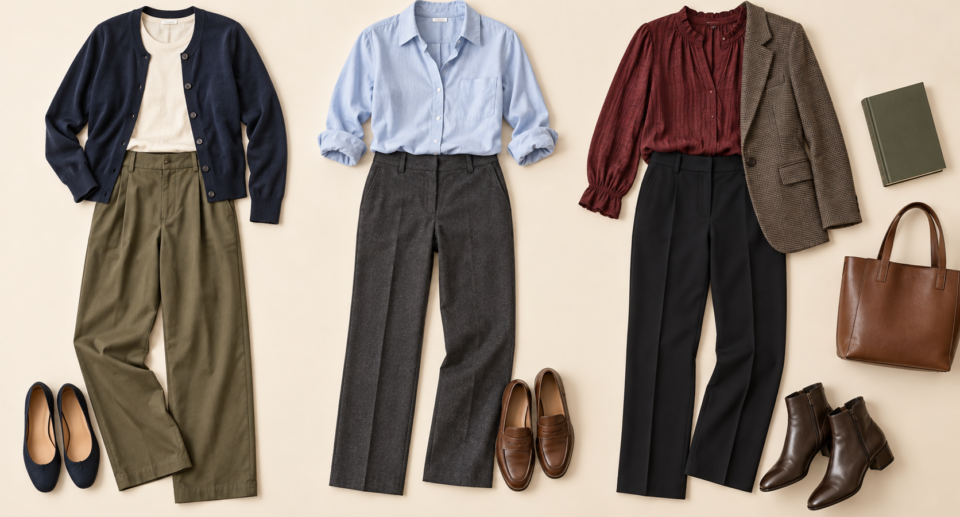
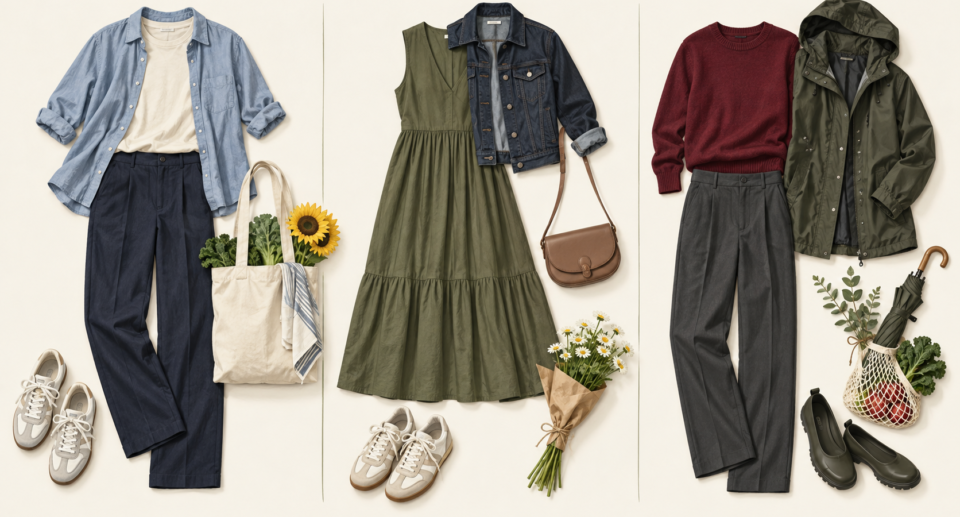
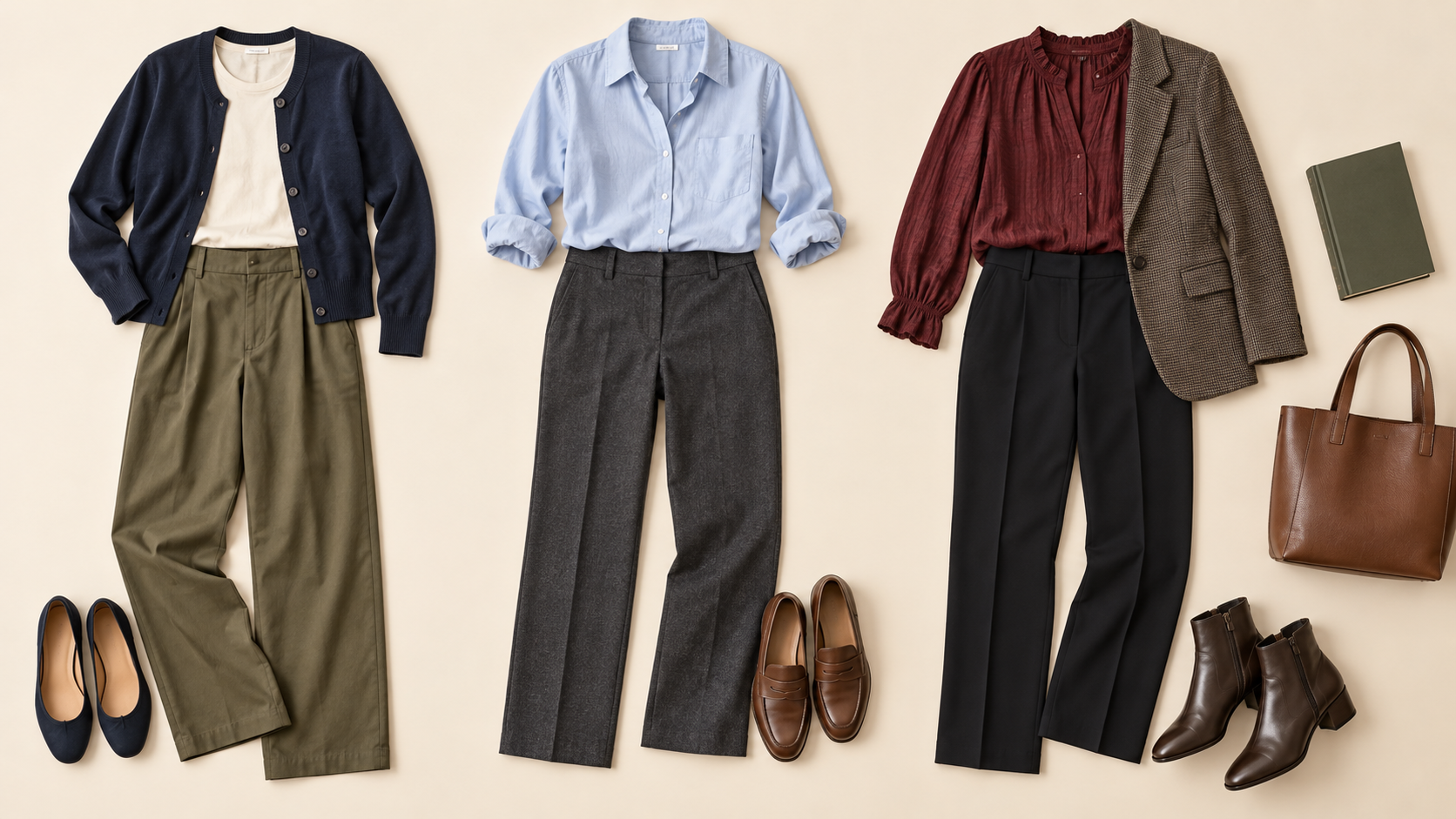
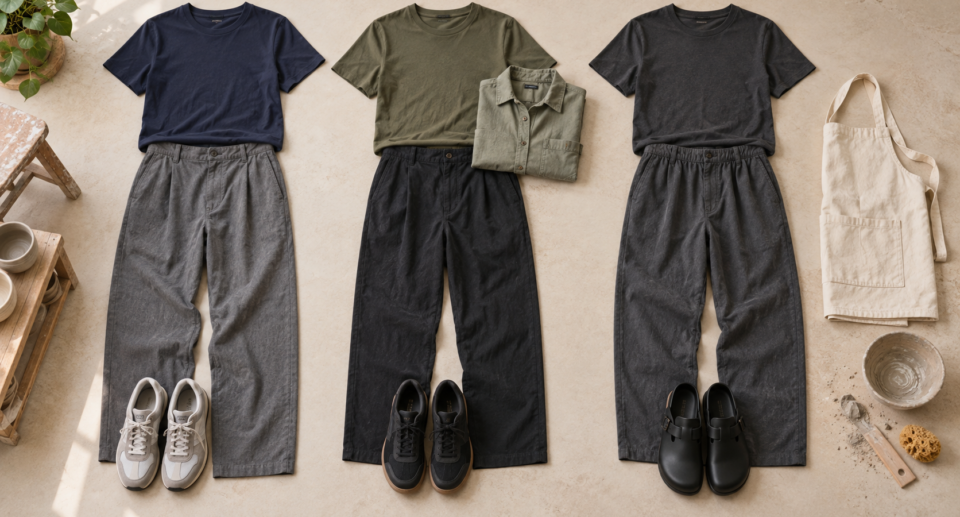
Start with straight or relaxed trousers that stay comfortable when you sit and lean forward. Add a simple T-shirt with sleeves that stay out of your hands, then use the studio-approved footwear you already own. A navy-and-grey combination or an olive-and-black pairing looks intentional without relying on fragile details.
Check your waistband while seated, not only in the mirror. If you need to tug the top down whenever you reach forward, choose another one. This is an occasion where an unremarkable but comfortable favourite can work better than a brand-new outfit you have not tested.
Outfit formula two: easy layers for a cooler studio
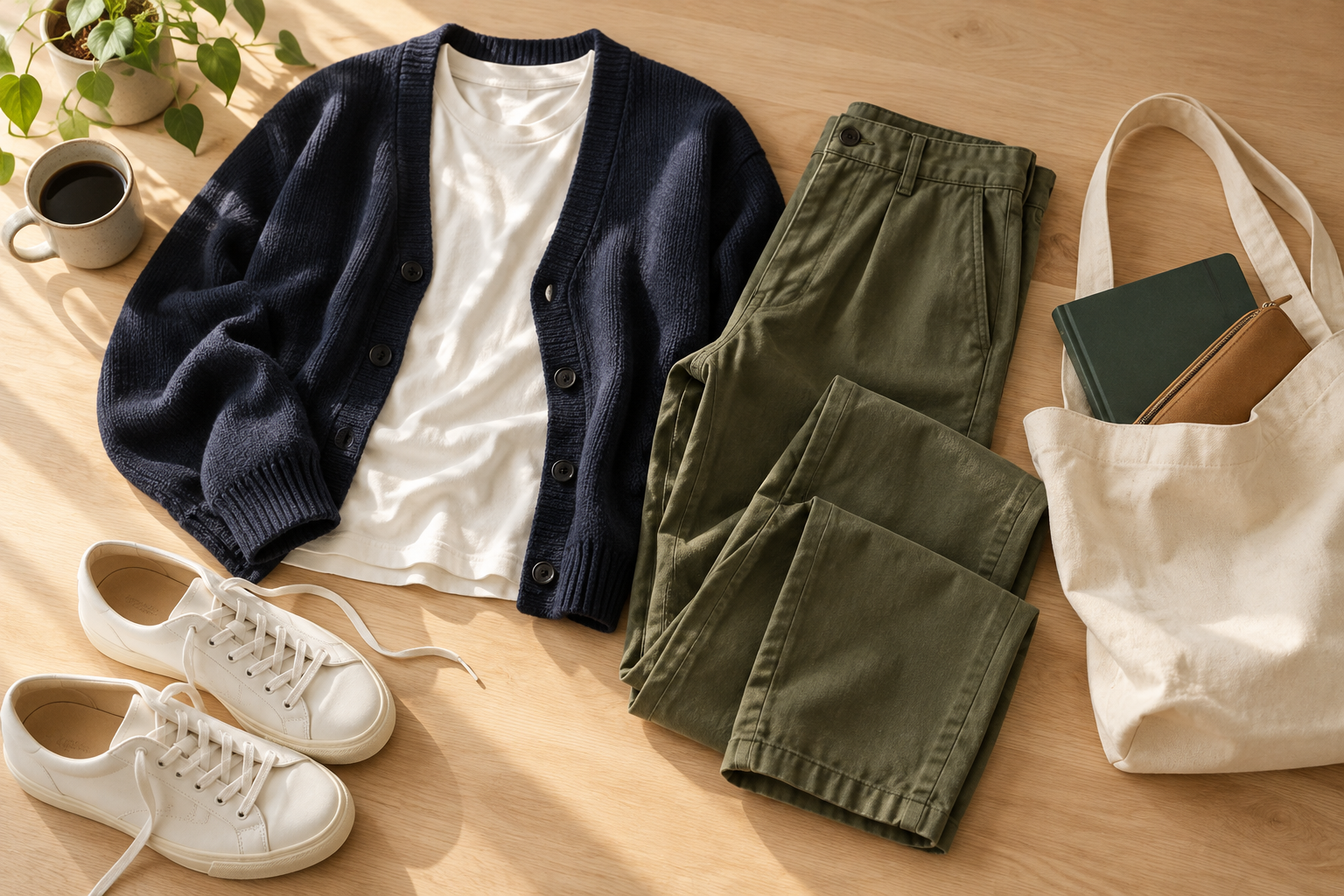
Choose the same practical base and add a removable layer for the journey. A simple cardigan or overshirt can make the outfit feel finished before class. Store it away from the work area if it is not suitable to wear during the activity.
Avoid depending on wide cuffs that continually slide down after you roll them. Try the actual movement at home: sit, reach and adjust your arms. If the layer is awkward, keep it for afterwards rather than trying to manage it while working.
Outfit formula three: a coordinated casual set
A casual top and trousers in similar tones can look polished with very little styling. The pieces do not need to be sold as a matching set. Pair charcoal with faded black, or two compatible blues, and let the clean lines do the work.
Check that the fabric and cut are appropriate for the session, rather than assuming anything labelled loungewear will work. Very long hems, trailing ties or a top that shifts whenever you bend may be inconvenient. Pick the version that lets you concentrate on the class.
Choose shoes for the studio first
Follow the studio’s shoe requirements. If closed footwear is requested, do not substitute sandals because they match the outfit better. Choose a familiar, secure pair you can wear comfortably and would not mind getting marked.
If you have plans afterwards and want different shoes, pack them separately rather than treating the class as a test run for uncomfortable footwear. A simple bag that closes is easier to manage than loose accessories on the worktable.
Keep personal styling away from the work
Leave valuable or delicate jewellery at home where possible. Ask the instructor about rings, bracelets, necklaces and anything that might interfere with the activity. Secure longer hair as the studio requires. These choices are practical preparation, not a reason to make the outfit dull.
Use colour instead: a favourite tee under the apron, a coordinated outer layer for the journey or a bag you already enjoy carrying. Avoid adding pieces you will spend the session worrying about.
Plan the transition to the rest of your day
If you are meeting someone after class, bring a clean top or outer layer and a separate bag for anything marked. Keep that clean piece away from the work area. Check care labels and the studio’s cleaning guidance before treating marks; avoid assuming one cleaning method suits every garment.
For an informal gathering afterwards, our comfortable book club outfit guide offers ideas for a relaxed second outfit. You do not need to wear the same top through both activities if changing makes the day easier.
A quick check before leaving
- Have you read the studio’s clothing and footwear instructions?
- Can you sit, lean and reach without repeatedly adjusting your clothes?
- Are your sleeves and hems manageable for the planned activity?
- Have you left unnecessary valuables at home?
- Do you need an apron, hair tie or clean layer, or does the studio provide them?
- Have you packed a separate bag for anything you want to keep clean?
Common questions
Can I wear jeans to pottery class?
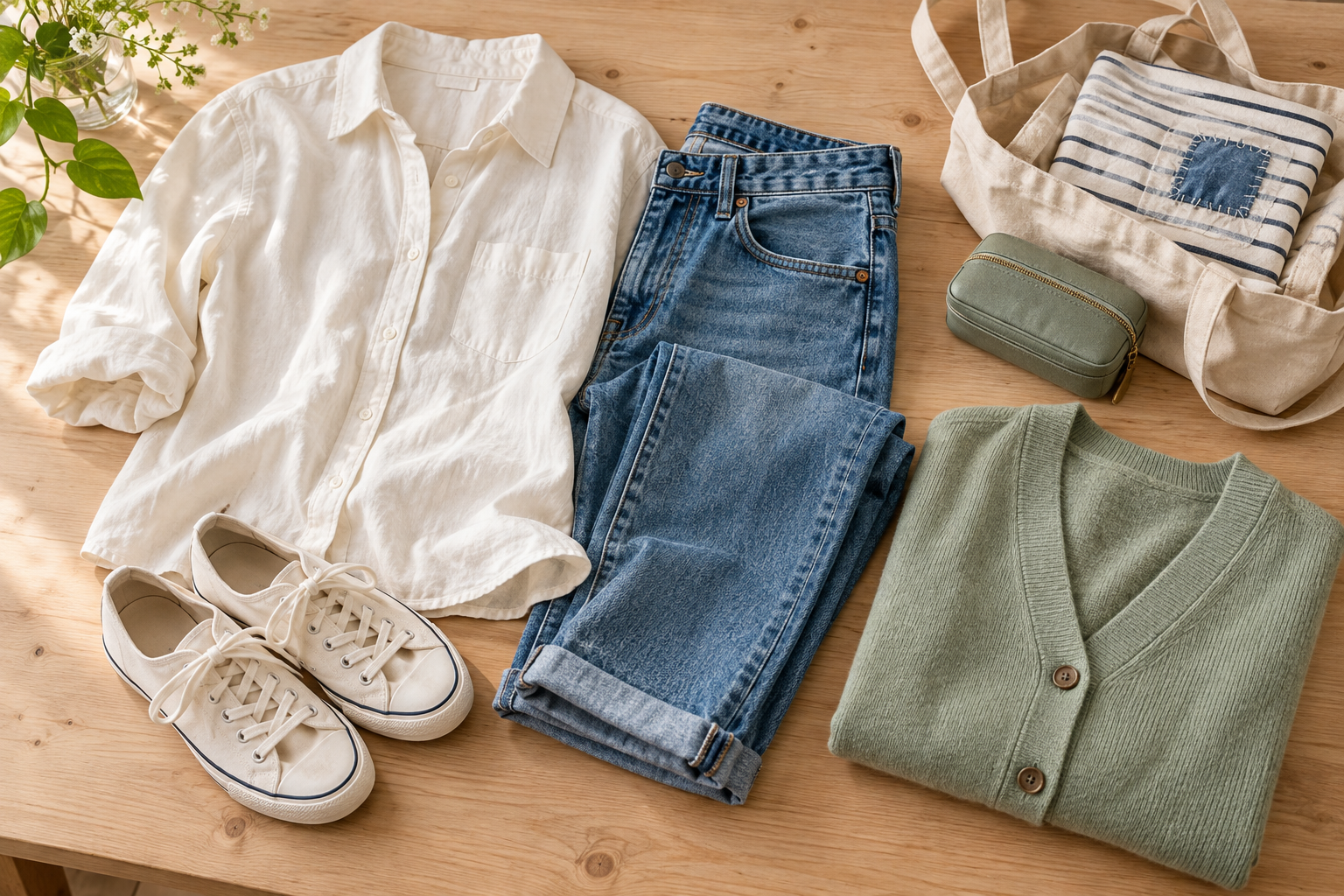
They can be an option if they suit the studio’s rules and allow comfortable movement. Test the fit while seated; a familiar relaxed pair may be easier than stiff, restrictive denim.
Do I need to buy a special outfit?
Usually the first step is checking your existing wardrobe and the studio instructions, not shopping. Buy something only if you are missing a genuinely required item.
Can I wear white?
You can choose light colours if you are comfortable with the risk of visible marks, but do not bring a favourite delicate piece expecting an apron to protect every part of it.