What to Wear When Shopping for Clothes: Three Easy Outfit Plans

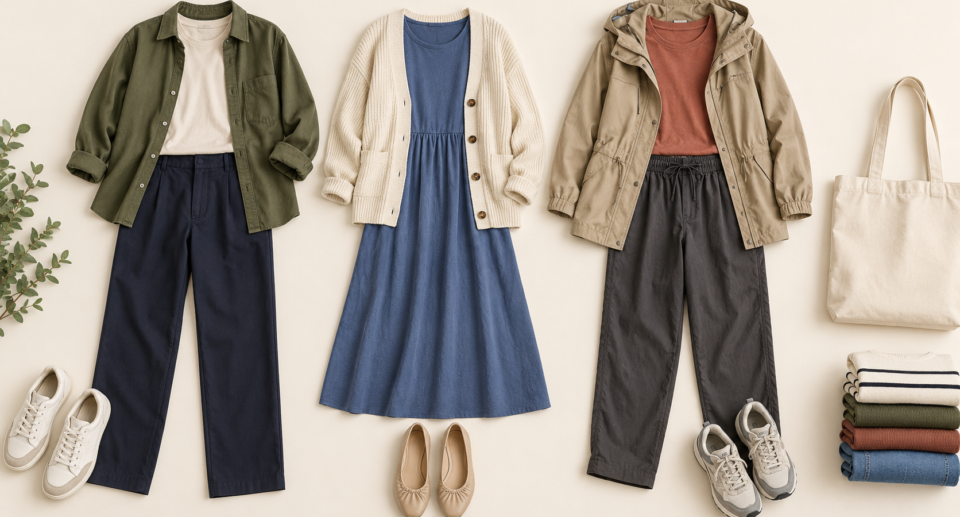
The best outfit for clothes shopping is one that is comfortable to walk in, easy to change out of and useful for judging how new pieces will fit your wardrobe. Start with familiar separates and shoes you can remove without a long fastening routine.
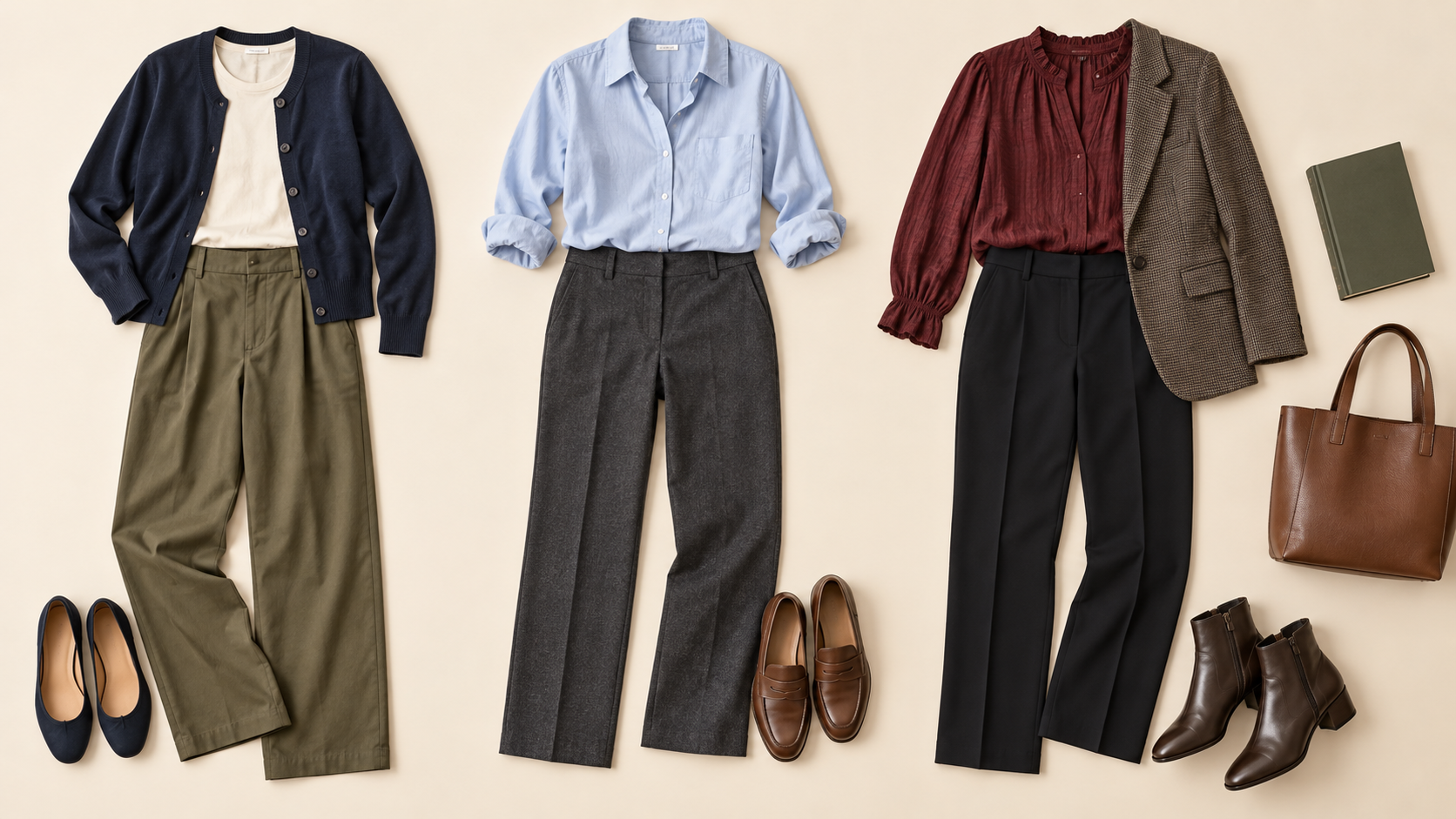
You do not need to buy a special shopping outfit. These three plans use everyday clothes, with adjustments for trying on trousers, dresses or workwear.
Plan around what you want to try on
Before getting dressed, make a short list of the gaps you want to fill. A shopping trip for jeans has different needs from one for a tailored jacket. Wear or bring the items you expect to combine with the purchase: a normal base layer, suitable underwear and the shoes that determine the hem length.
Check the weather and your route as well. A light layer that fits in your bag is easier to manage than a coat you carry through every fitting room. If you need rain protection, give the wet layer its own bag so it does not sit against clothing.
Outfit one: T-shirt, pull-on trousers and loafers
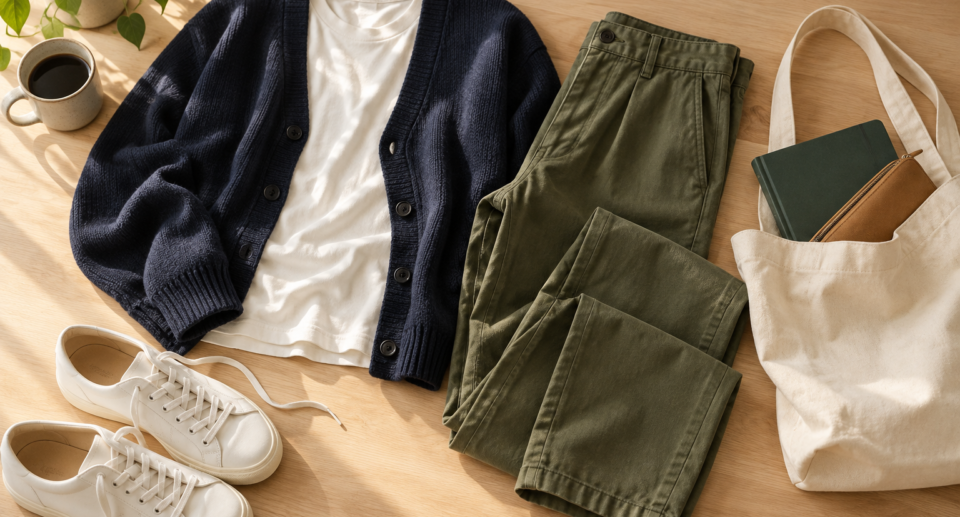
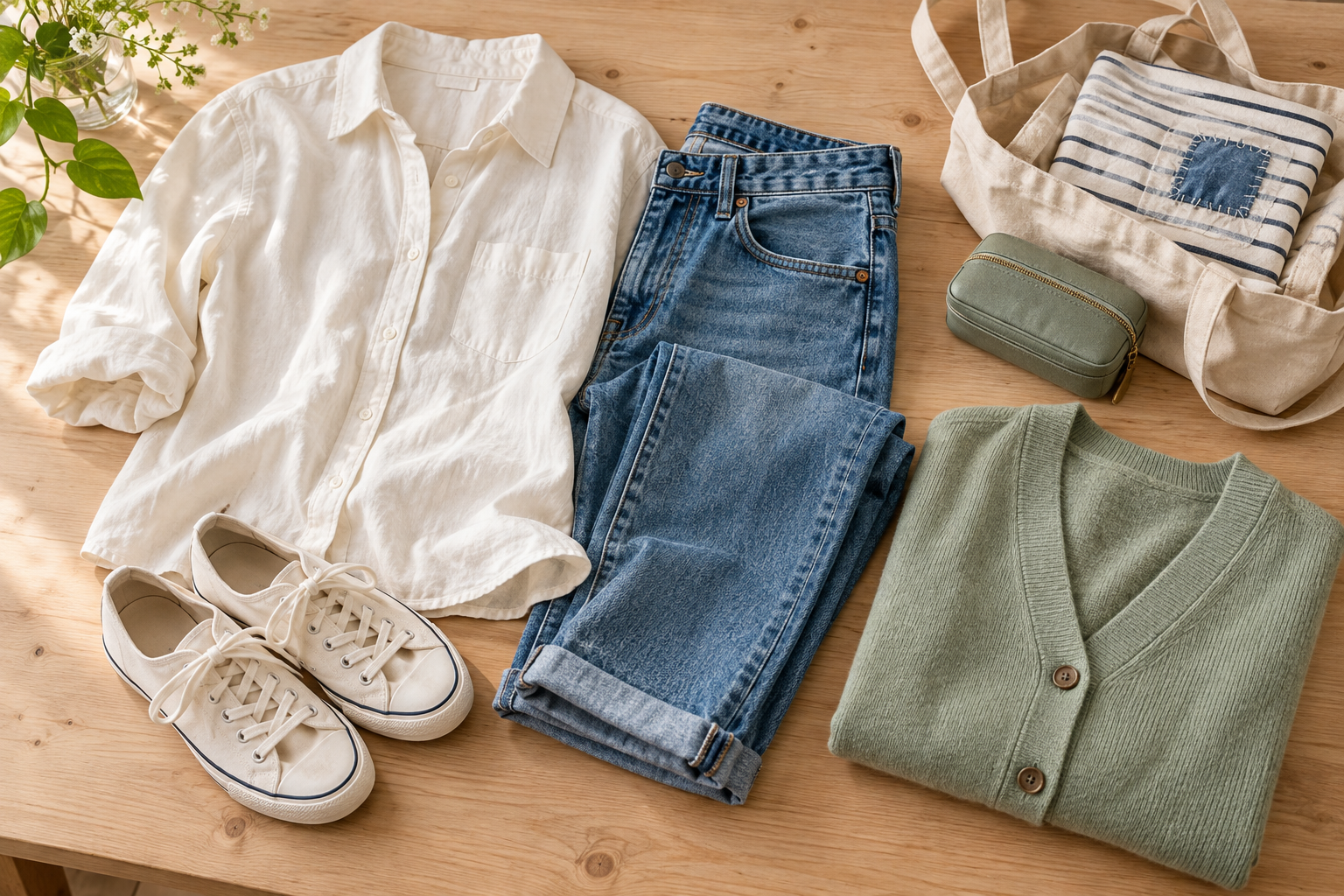
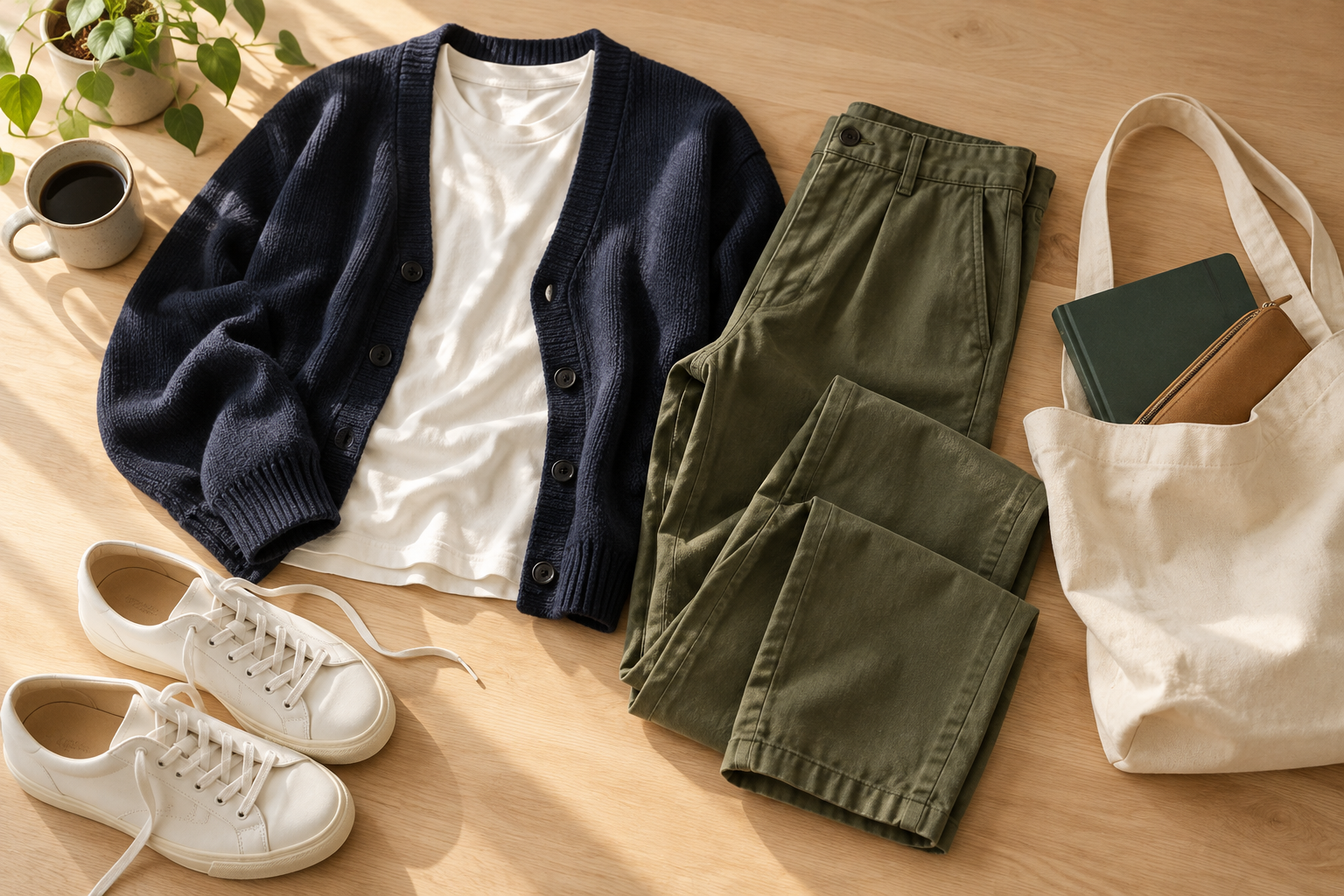
Choose a soft, plain T-shirt, straight-leg pull-on trousers and comfortable loafers or another easy-on flat shoe. Add a cardigan and a compact crossbody bag. This combination suits a general shopping day with several stops.
The separate top and trousers let you change one half without removing the other. A simple neckline and minimal jewelry make it easier to pull garments on. Check that the trousers are comfortable when sitting as well as walking.
Change it for your needs: Replace loafers with supportive trainers if you walk a long distance. The extra time tying laces is worth it if those are the shoes your feet already tolerate well.
Outfit two: A fitted base layer and easy skirt
If your list is mostly tops and jackets, try a comfortable close-fitting base layer with a simple skirt and flats. A thin base layer can help you compare the drape of shirts and blazers without a thick sweater underneath.
Choose the amount of coverage that feels right for you. A fitted layer is useful for trying on some outer pieces over your clothes, but it does not replace a private fitting room when you need one. Ask about changing-room access before planning a trip around trying everything on.
Watch the proportions: A jacket that looks balanced with a skirt may look different with your usual work trousers. Bring a reference photo or the actual trousers if the combination matters to the purchase.
Outfit three: Your real workwear base
When shopping for office trousers, a suit jacket or a presentation outfit, wear a typical work top and bring the shoes you plan to use. Comfortable travel shoes can stay on for the journey, with your work shoes packed separately.
This makes it easier to judge trouser length, jacket shape and whether the new item works with clothes you already own. Avoid assuming a piece will transform once you find a different top, new shoes and extra accessories.
For a practical wardrobe follow-up, use our five-day plan for repeating work outfits to test how the item could fit into your existing rotation.
Use a short fitting-room routine
- Start with your intended combination. Try the garment with the layer and shoes you expect to wear with it.
- Move normally. Sit, walk a few steps and reach gently as you would during the day. Notice pulling, slipping or restriction.
- Check the details. Look at seams, closures, lining and care instructions. Check both sides of the garment in the mirror.
- Compare sizes without judging the label. Sizing varies; use comfort and fit rather than the number as your decision.
- Decide what still needs work. If alterations are needed, establish whether they are feasible and add their cost before buying.
Keep the decision specific: “The shoulders sit comfortably but the sleeves need shortening” is more useful than “It might work somehow.” You can take a reference photo if the shop permits it; avoid including other shoppers or staff without consent.
Pack a small, useful bag
- A short shopping list and photos of pieces you want to match.
- A reusable bag for purchases.
- The relevant shoes or thin base layer if you are not already wearing them.
- Any measurements you rely on, recorded in your phone.
Leave bulky accessories at home if they make changing harder. Keep jewelry simple enough that it does not catch on delicate fabrics. Wear makeup and fragrance thoughtfully so trying on garments does not leave marks or scent behind.
Check the purchase before leaving
Confirm the store’s return terms for that item, especially sale stock and altered pieces. Keep the receipt and tags according to the shop’s requirements. If you are uncertain about the fit and cannot return it, taking time to decide may be the better choice.
If your goal is finding clothes without buying new, our clothing-swap outfit guide covers a different setting with its own practical needs.
A successful shopping outfit fades into the background. You can walk comfortably, change without fuss and assess new clothes against your real life. Choose the plan that helps you do those things with the pieces you already own.