What to Wear to a Clothing Swap: Easy Layers and Practical Outfits

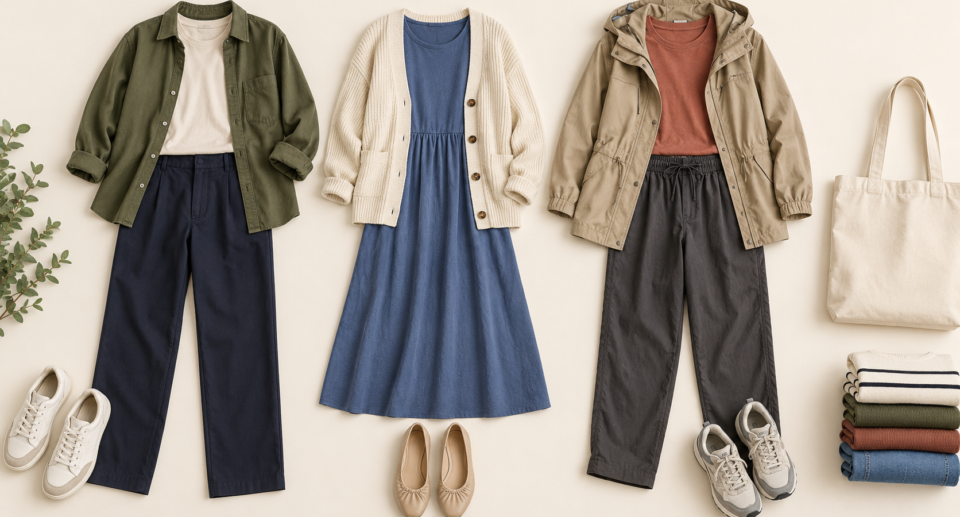
The best outfit for a clothing swap is one that makes trying things on straightforward. Think comfortable movement, a base layer you are happy to keep on and shoes that suit the trip. You do not need to arrive in your most fashionable combination or buy anything for the event.
If you are wondering what to wear to a clothing swap, start by checking whether the venue has private changing rooms. That one detail matters more than a trend. The suggestions below are flexible outfit plans, not a dress code: choose the coverage, fit and colours that feel right to you.
Ask about the changing setup first
A community hall may have a shared mirror rather than individual fitting rooms. A shop-hosted event may have changing cubicles. Ask the organiser before you go, and never assume you will be comfortable changing in a shared space.
If there is no private space, consider trying jackets and loose layers over your clothes. You can also compare a garment’s measurements with something that fits you, where the event allows it. Do not feel pressured to undress, accept a poor fit or take an item simply because it is available.
Read the event rules separately from choosing your outfit. The Western Metropolitan Regional Council’s swap guidance, for example, describes what its events accept and encourages taking items you will actually use. Other organisers may use different limits, tokens or item categories.
Outfit one: a simple base with an easy outer layer
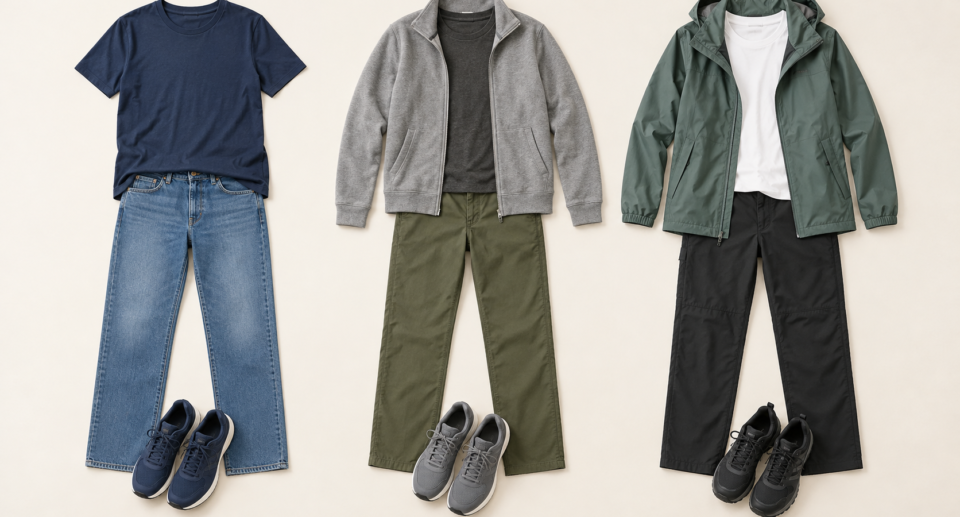
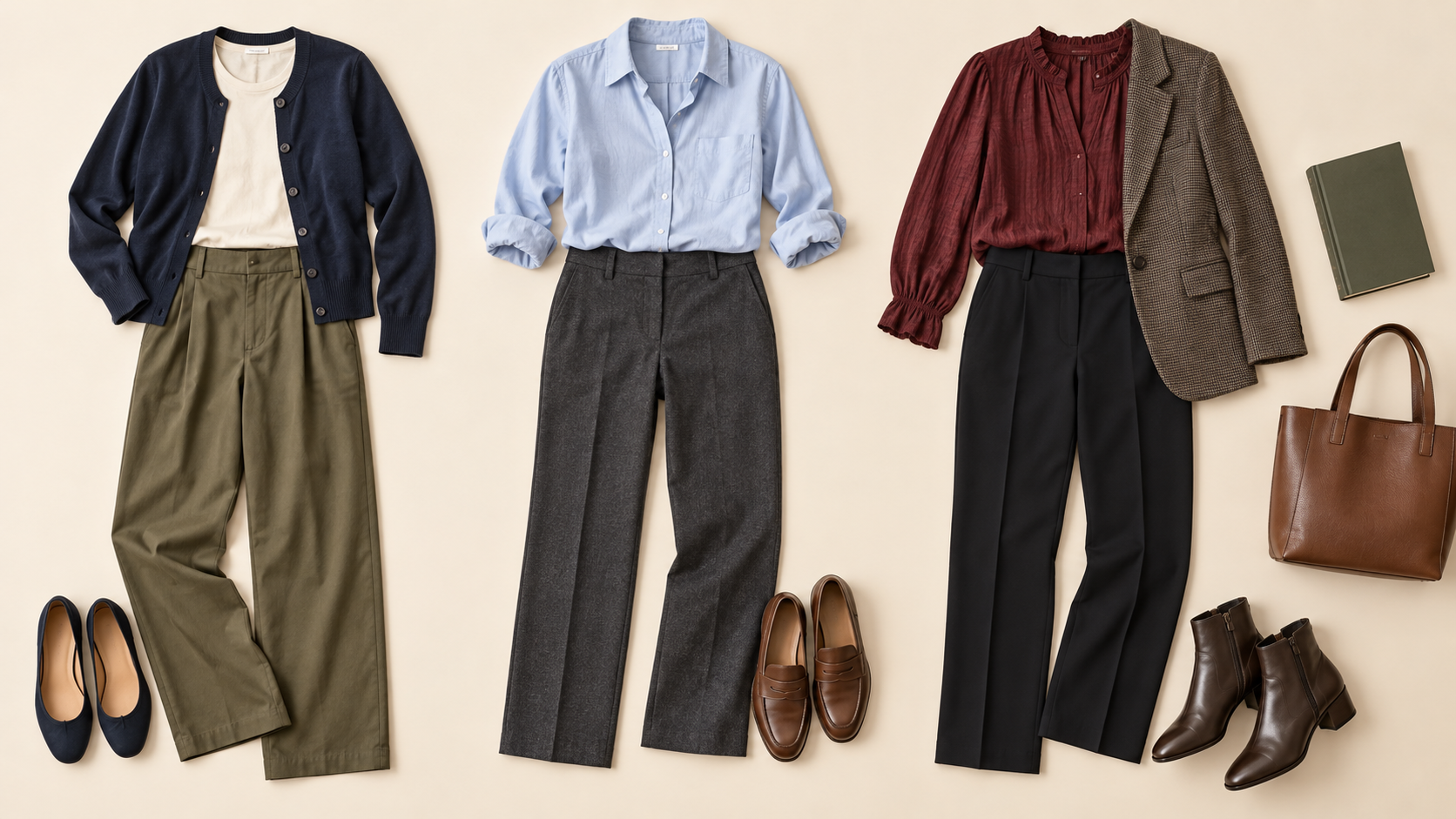
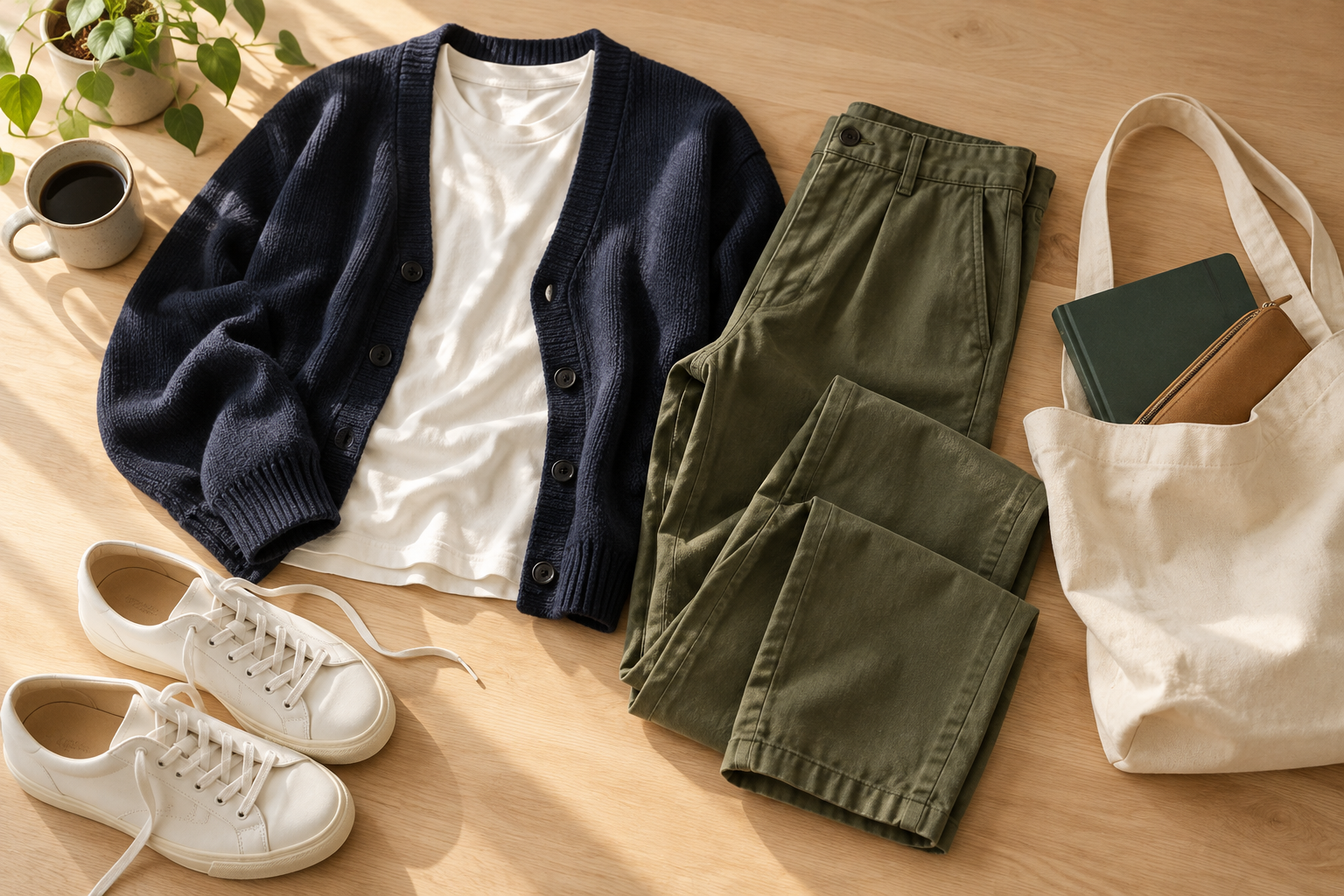
Try a plain short-sleeve top, comfortable straight-leg trousers and a cardigan or overshirt. Navy trousers with a cream tee and an olive overshirt make a calm base, but use whatever colours already work in your wardrobe. The removable layer lets you check how a new jacket sits over your usual clothes.
Choose trousers that are comfortable while bending to a lower rail or carrying a bag. A complicated belt or several layers around the waist can make repeated fittings frustrating. Avoid wearing your tightest jeans just because they look good while standing still.
This plan suits someone mainly looking for tops, jackets and accessories. Wear your usual underlayers so you can judge whether a neckline or fabric works for you. Bring no expectation that every item must fit over your base outfit.
Outfit two: a jersey dress with a cardigan
A simple jersey dress with a cardigan is another option if dresses are already part of your style. Choose a familiar length and a neckline that stays comfortable when you move. Flat shoes or trainers can keep the journey practical.
This combination can make it easy to try another outer layer, but it is not automatically the best choice for trying trousers. If trousers are your priority, private changing facilities may matter more than choosing a dress. Plan around what you want to assess rather than following a universal “swap outfit” rule.
Keep jewellery uncomplicated. A favourite small accessory is fine; several necklaces or a large scarf can get caught in collars while you try things on. Put valuables in a secure pocket or a small bag you can keep with you.
Outfit three: a weather-ready version for a longer journey
For a walk or public-transport trip, start with comfortable shoes and an outer layer that suits the forecast. Underneath, use a simple top and relaxed trousers. Choose a bag you can manage on the return journey as well as the outward one.
If rain is likely, keep the clothes you are bringing protected and avoid a trouser hem that drags on wet ground. Our rainy-day outfit guide offers more ideas for planning around wet travel. You do not need office clothes for a swap; use the practical layering principle.
Keep your own belongings separate
Bring donated items in one bag and keep your coat, accessories and personal belongings together somewhere the organiser permits. A cardigan left on an open rail could be mistaken for a swap item. Do not use a table intended for available clothes as your personal storage spot.
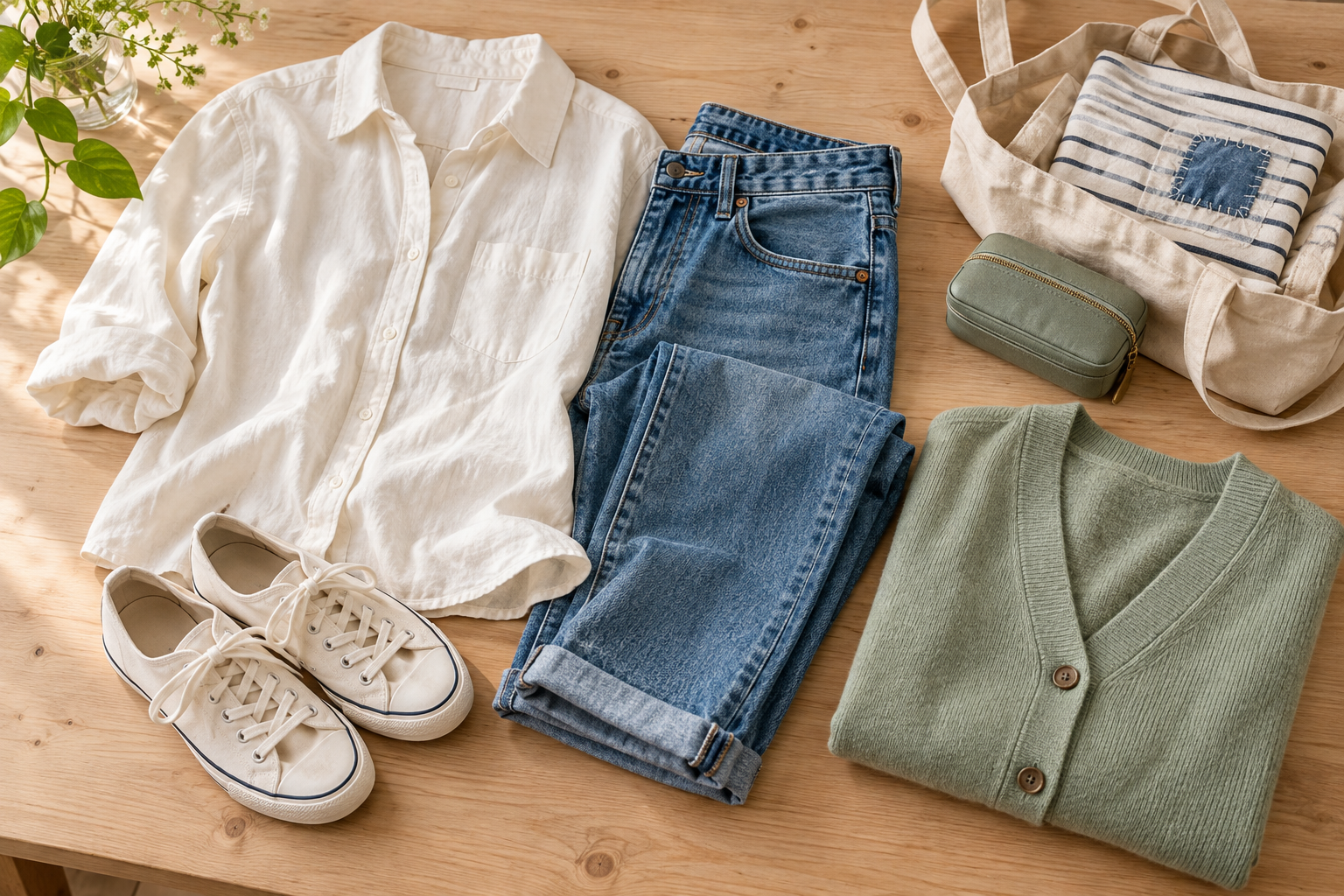
A spare reusable bag can help separate chosen items from the ones you arrived in. Keep any tokens or entry information accessible, but avoid bringing so much that you spend the whole event managing bags. Check whether the venue provides a cloakroom before depending on one.
Use a fit check, not just a mirror check
When permitted to try an item, sit, reach forward and take a few steps. Look at the shoulder position, waistband and hem rather than judging only the colour. Check the care label and visible condition so you understand what you are taking home.
Ask yourself what you would wear it with next week. If you can name a useful combination with clothes you own, the item has a clearer role. Our guide to repeating outfits explains how small changes can make existing pieces work together without needing a completely new wardrobe.
A quick leaving-home checklist
- Check the venue, timing, accepted items and changing arrangements.
- Wear a comfortable base outfit with the coverage you prefer.
- Choose shoes for the journey, not just for the mirror.
- Keep your personal coat and bag distinct from the swap items.
- Bring only what the organiser accepts and follow its condition requirements.
- Leave room to say no to an item that does not fit your life.
Do I need to dress up for a clothing swap?
Usually the useful question is what the particular event requires. Follow any stated dress code, but a practical everyday outfit is a sensible starting point for a casual swap. Comfort and easy layering matter more than looking as if you bought something new for the occasion.
What if nothing works over my clothes?
Do not force the fit or compromise your privacy. Ask about an appropriate changing space, use garment measurements where helpful, or leave the item. Coming home with fewer well-chosen pieces is better than bringing back another bag of clothes you will not wear.