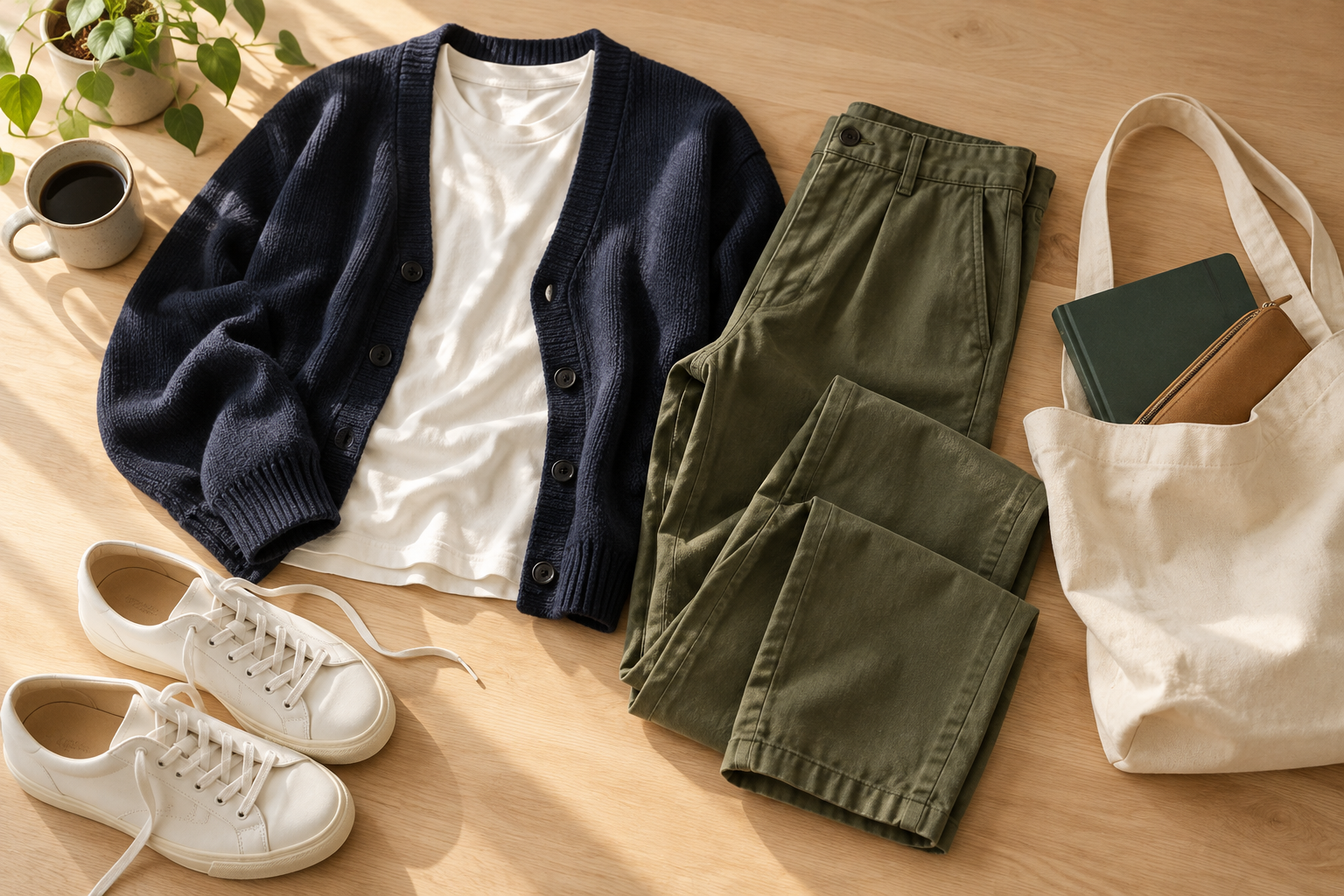
What to Wear to Volunteer at a Food Bank: Three Practical Outfits

For a food-bank volunteering shift, a practical starting outfit is a plain T-shirt, comfortable full-length trousers and secure closed-toe shoes. Then check the organisation’s instructions: warehouse sorting, outdoor distribution and office support may have different requirements. The right outfit is the one that suits your assigned job, not the most dressed-up look in the room.
You can still feel put together. Clean lines, clothes that move easily and a simple colour palette are enough. Leave delicate fabrics and shoes you cannot comfortably stand in at home.
Read the volunteer email before choosing clothes
Look for a dress code, the location of the shift and any information about lifting, food handling or working outside. Ask if anything is unclear. Do not assume that an outfit accepted at one food bank will meet another’s rules.
For example, Vermont Foodbank requires shoes with closed toes and heels. The Foodbank of Southern California also specifies closed-toe shoes and comfortable clothing. These examples show why sandals are a poor default, but your own coordinator’s instructions take priority.
Outfit one: a straightforward sorting-shift look
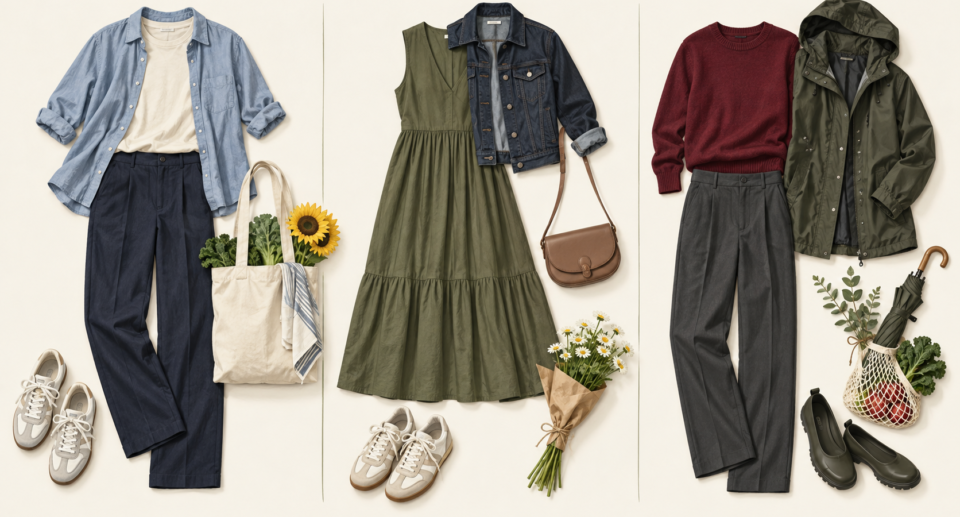
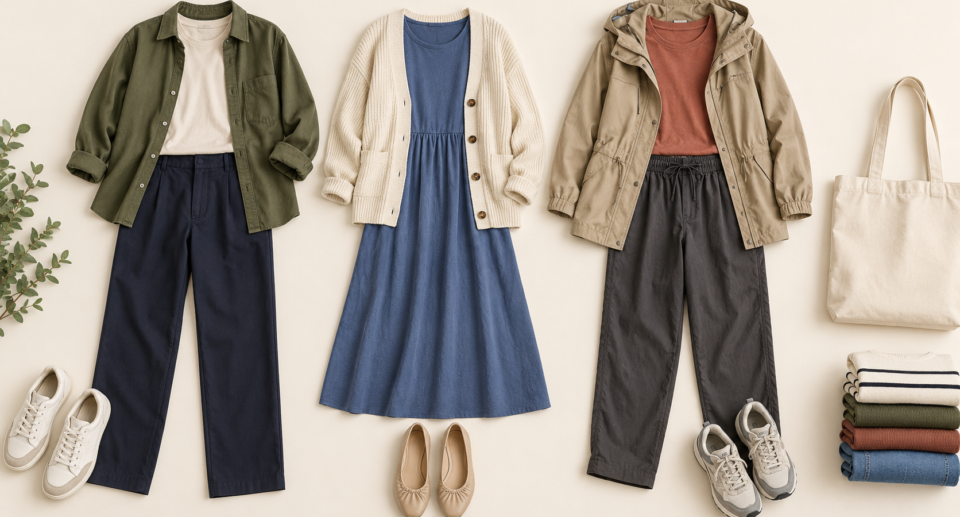
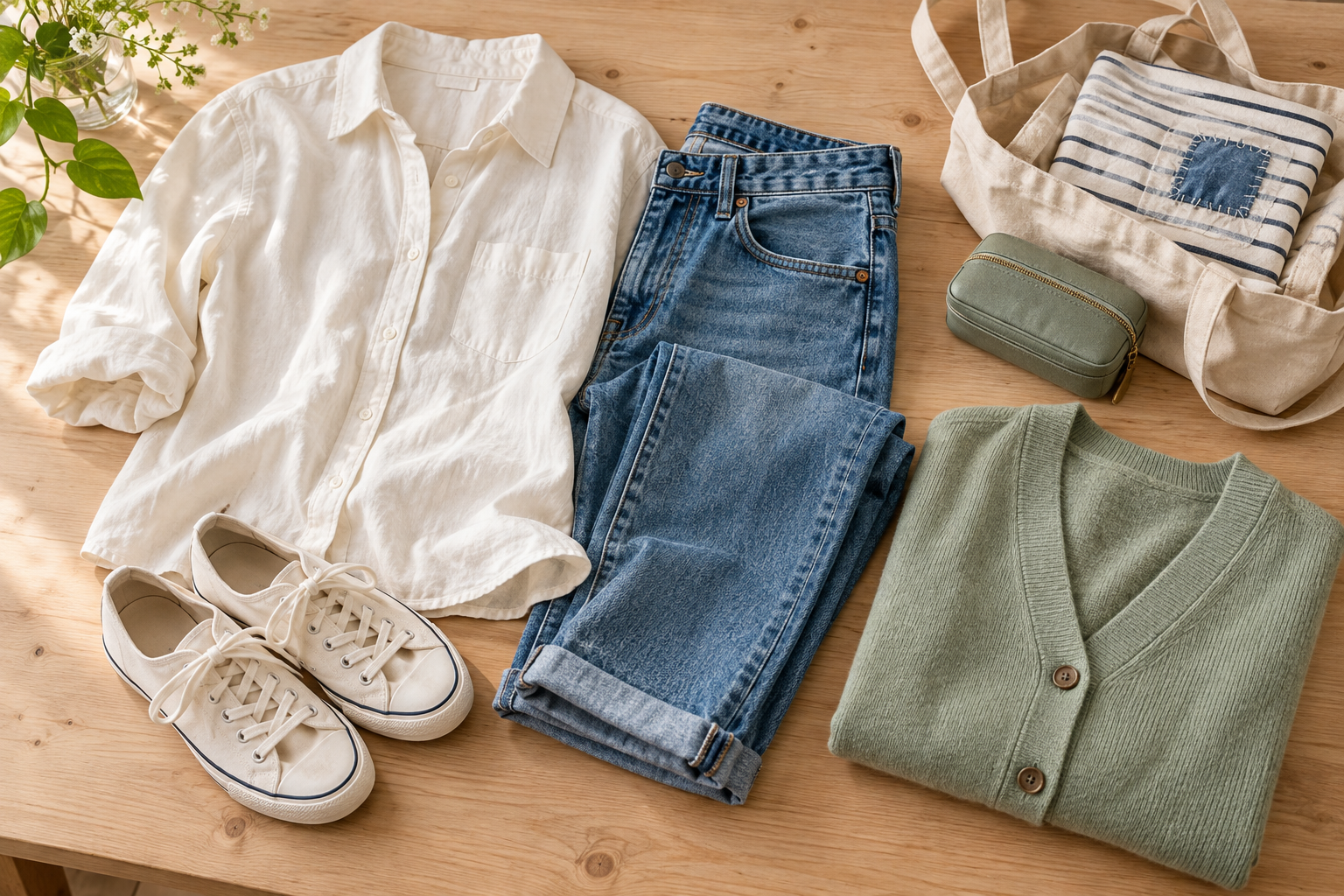
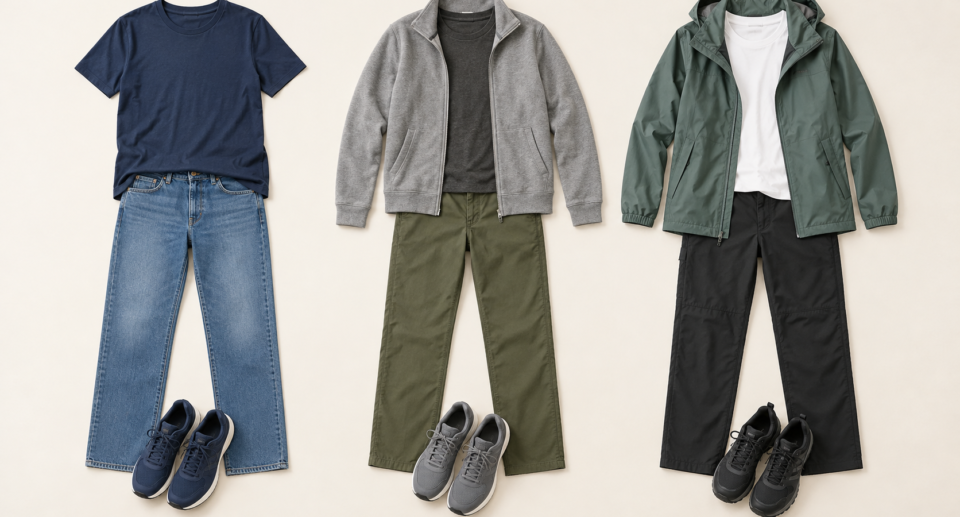
Pair straight-leg jeans or easy-fitting work trousers with a plain cotton-blend T-shirt and comfortable closed-toe trainers, where trainers meet the stated dress code. Choose trousers that let you bend without pulling at the waistband and a top that stays comfortably covered when you reach.
A navy top with medium-wash jeans is an easy combination. Alternatively, try olive trousers with a charcoal tee. You do not need a special purchase: start with washable pieces you already own and would not mind getting dusty.
Before leaving, sit, reach and bend gently in the outfit. If you keep adjusting the top or the waistband, change it now rather than halfway through a shift. Avoid loose cords, dragging hems or accessories that could catch while handling boxes.
Outfit two: layers for a cooler indoor space
Wear comfortable trousers, a short-sleeved base layer and a simple zip-front sweatshirt. A removable layer is easier to adjust than one thick jumper. Ask whether the work area is temperature-controlled rather than guessing from the weather outside.
Keep the sweatshirt plain and reasonably close-fitting without restricting movement. If it comes off, store it only in the place the organisation provides, not on a packing surface. Bring only the bag you need, and ask where personal items can be kept.
Outfit three: an outdoor distribution shift
Use the same practical base, then add weather-appropriate outerwear that meets the organiser’s guidance. A lightweight rain jacket may be useful when rain is forecast; a warmer layer may be needed for an early start. Check the actual shift location, since being under a canopy is different from working entirely indoors.
Pick footwear for the expected surface as well as the dress code. Fashion flats that work for an office commute may not be suitable for a distribution area. If special protective footwear or visibility clothing is required, confirm the specification and whether the organisation supplies it before buying anything.
Small details that make the outfit easier to wear
- Jewellery: keep it minimal and follow any food-handling rules.
- Hair: bring a way to secure long hair if required for the role.
- Graphics: choose a plain top or an unobtrusive design rather than an offensive slogan.
- Pockets: useful for essentials only if the role permits them; avoid overloading them.
- Extras: ask about gloves, aprons or other protective items instead of assuming your own are suitable.
These are clothing-planning suggestions, not a substitute for the organisation’s safety briefing. Tell the coordinator about any task limitations and ask for an appropriate role; an outfit does not make a lifting task suitable for everyone.
Can you wear leggings or shorts?
Only if the organisation allows them and they suit the assigned work. Full-length trousers are a more useful starting point when you have not yet received instructions. If leggings are permitted, check coverage and comfort while moving. Avoid treating another volunteer’s outfit as permission to ignore the written dress code.
Make it a repeatable outfit
Once you know what works for your shift, keep a simple formula: practical trousers, a washable top, approved shoes and one optional layer. Repeat the formula rather than buying a new look for every session. Our guide to repeating work outfits offers useful ideas for rotating a small set of pieces.
The final check is simple: you can move comfortably, your shoes meet the rules and your clothes suit the job you agreed to do. That is a thoughtful volunteering outfit.